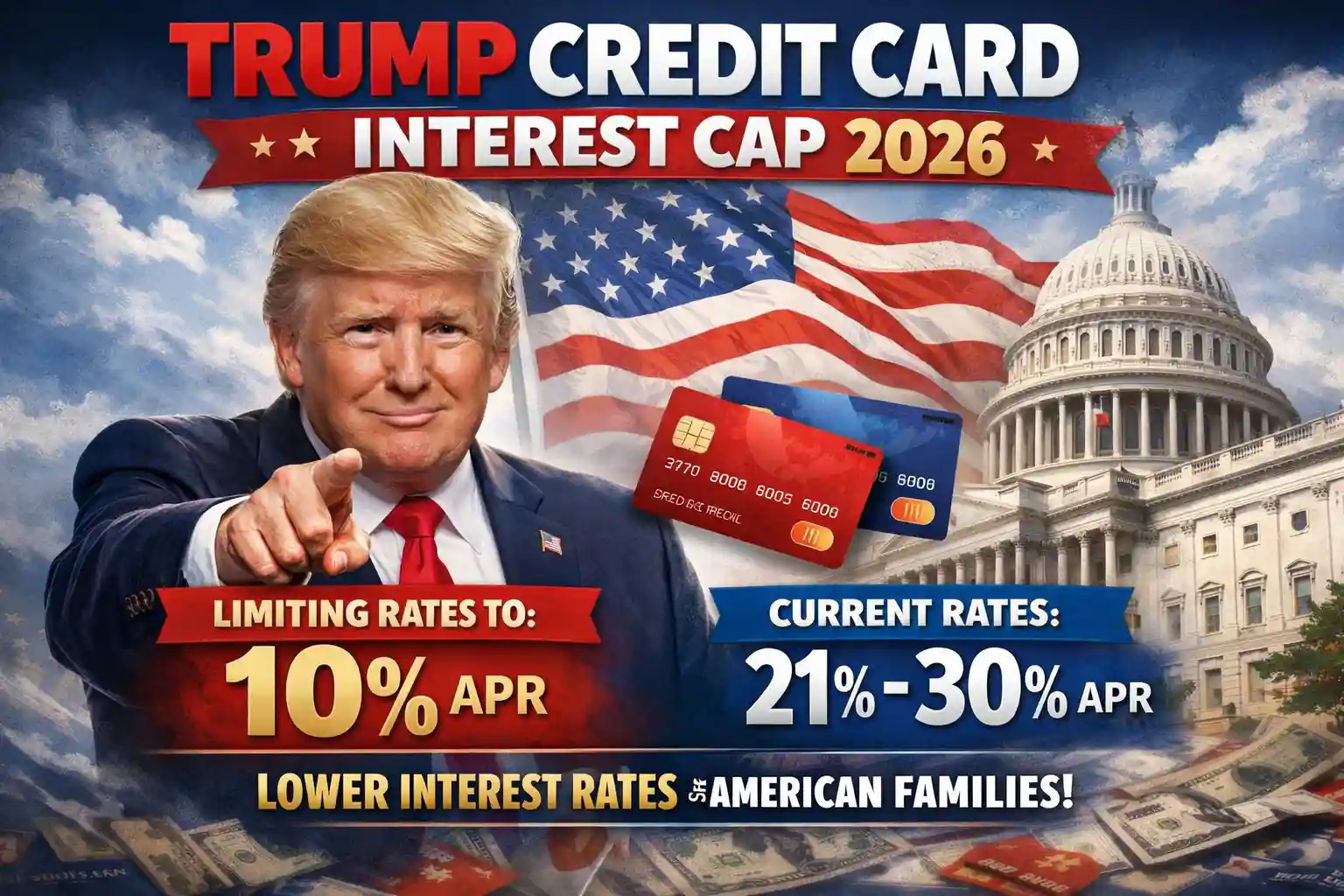
The Trump Credit Card Interest Cap 2026 is one of the most talked-about financial reforms in the United States, aiming to reshape how Americans manage debt and credit. President Donald Trump has proposed a bold plan to limit credit card interest rates to 10% APR, a significant reduction from the current average of 21–30%.
This initiative is designed to provide relief to millions of households burdened by high-interest debt, offering a fairer system that prioritizes consumer protection over excessive bank profits. Supporters argue the cap could save families billions annually, reduce delinquency rates, and encourage responsible borrowing. Critics, however, warn that banks may cancel cards for high-risk borrowers, scale back rewards programs, and tighten lending standards, potentially limiting access to credit.
The debate has also reached colleges and universities, where financial literacy programs and business schools are analyzing the proposal’s impact on consumer finance, regulation, and economic policy. Beyond debt relief, the cap raises questions about long-term sustainability, banking innovation, and the balance between consumer rights and corporate profitability.
For students, families, and professionals, understanding Trump’s credit card interest cap is essential to navigating the evolving U.S. financial landscape. This meta description provides the latest and detailed information about the proposal, its benefits, risks, and nationwide implications, ensuring readers gain a clear, human-centered perspective on one of the most significant financial debates of 2026. Stay informed about how the USA credit card interest cap could transform debt management, consumer protection, and financial education.
Credit cards are a lifeline for millions of Americans, offering convenience, rewards, and access to short-term credit. Yet they also represent one of the most expensive forms of borrowing. In January 2026, President Trump announced his intention to cap credit card interest rates at 10% APR for one year, arguing that Americans were being “ripped off” by lenders charging rates between 20% and 30%.
This article explores the details of Trump’s credit card interest cap proposal, its potential impact on consumers, banks, and the broader economy, and why it has become a flashpoint in U.S. financial policy.
The State of Credit Card Debt in the USA
- Total Credit Card Debt: Over $1.1 trillion, a record high.
- Average APRs: Between 21% and 30%, depending on creditworthiness.
- Consumer Struggles: A Bankrate survey found that 61% of cardholders with balances have been in debt for at least a year, up from 53% in late 2024.
These figures highlight why the proposal resonated with millions of Americans facing mounting financial pressure.
Trump’s Proposal Explained
- Cap Level: 10% APR, less than half the industry average.
- Duration: One year, beginning January 20, 2026.
- Voluntary Compliance: Trump initially demanded banks comply voluntarily by the deadline.
- Next Step: After lenders refused, Trump urged Congress to pass a federal law enforcing the cap.
Supporters’ Arguments
- Consumer Relief: A cap could save households up to $100 billion annually in interest payments.
- Fairness: Advocates argue banks profit excessively from high rates, while ordinary Americans struggle.
- Political Appeal: Trump’s stance has created a rare “horseshoe alliance” between conservatives and progressives, both supporting consumer protection.
Critics’ Concerns
- Banking Industry Pushback: Lenders warn that a cap could force them to cancel millions of credit cards, especially for high-risk borrowers.
- Rewards Programs at Risk: Airline miles, cashback, and college partnership programs could shrink or disappear.
- Credit Access: Banks argue that limiting interest rates would reduce lending to those with weaker credit histories.
- Temporary Nature: Critics question whether a one-year cap offers meaningful long-term relief.
Impact on Consumers
- Lower Interest Payments: Families could save thousands annually.
- Debt Management: Easier repayment schedules could reduce delinquency rates.
- Credit Availability: Riskier borrowers may lose access to credit altogether.
Impact on Colleges and Financial Education
Colleges and universities are paying close attention to the proposal:
- Business Schools (Harvard, Wharton, Stanford): Incorporating the cap into case studies on regulation and consumer finance.
- Community Colleges: Updating financial literacy curricula to reflect capped interest rates.
- Student Credit Programs: Partnerships between banks and colleges may shrink, reducing student access to branded credit cards.
Economic Ripple Effects
- Airline Industry: Loyalty programs tied to credit cards could lose billions.
- Fintech Growth: Alternative lending platforms may rise as banks tighten credit.
- Consumer Spending: Lower interest rates could boost disposable income, fueling economic growth.
Political Landscape
- Trump’s Position: Framed as protecting Americans from exploitation.
- Congressional Debate: Trump is urging lawmakers to pass a one-year law enforcing the cap.
- Public Opinion: Many Americans support the idea, though skepticism remains about feasibility.
Brief Summery
The Trump credit card interest cap proposal is one of the most significant consumer finance debates of 2026. While it promises relief for millions of Americans, it also raises questions about credit access, banking profitability, and long-term sustainability.
For consumers, the cap represents hope for debt relief. For banks, it signals potential disruption. For colleges, it offers a real-world case study in financial regulation. Ultimately, the debate underscores the tension between consumer protection and financial innovation in the U.S. economy.